'Comics Is Such a Jealous Medium': Rolling DIE: Loaded With Kieron Gillen, Part 1
In 2021, Kieron Gillen and Stephanie Hans wrapped their run on the deconstructionist fantasy comic DIE. Four years later, they're back with the sequel, DIE: Loaded. Gillen explains the series' philosophy and what sets it apart from the original.

I was a little bit surprised to find myself talking to writer Kieron Gillen about DIE: Loaded, the sequel to his and artist Stephanie Hans' critically acclaimed comics series DIE, and that was only partly because I wasn't sure that he'd agree to sit for an interview with an outlet that didn't technically exist yet.
Mostly, it was because I had been convinced there wouldn't be any more DIE. Over the course of 20 issues released from 2019-2021, Gillen and Hans had told a story that felt pretty complete, and I didn't recall hearing any talk about a possible continuation during its original serialization.
That my copy of the DIE deluxe hardcover edition, which collects all 20 of those original issues, had Book One printed clearly and prominently on its spine did nothing to dissuade me of this notion. Speaking over video call from his home in the U.K., Gillen makes me feel slightly better about the whole thing by shedding light on a second meaning besides the obvious one.
"We put 'Book One' on the side of it, and it's just future-proofing," Gillen tells me, "in that, if we choose to do a sequel, it's going to look stupid if we don't have 'Book One' on Book One, you know?
"There's also the slightly meta reason," he continues, "as in [it's] Book One, and all the things about DIE RPG and all the stories in DIE RPG that you play, and the ones that you make up are canon due to the nature of DIE itself. So it was Book One, and then everyone else's RPGs are Books Two to X million."
Welcome to DIE
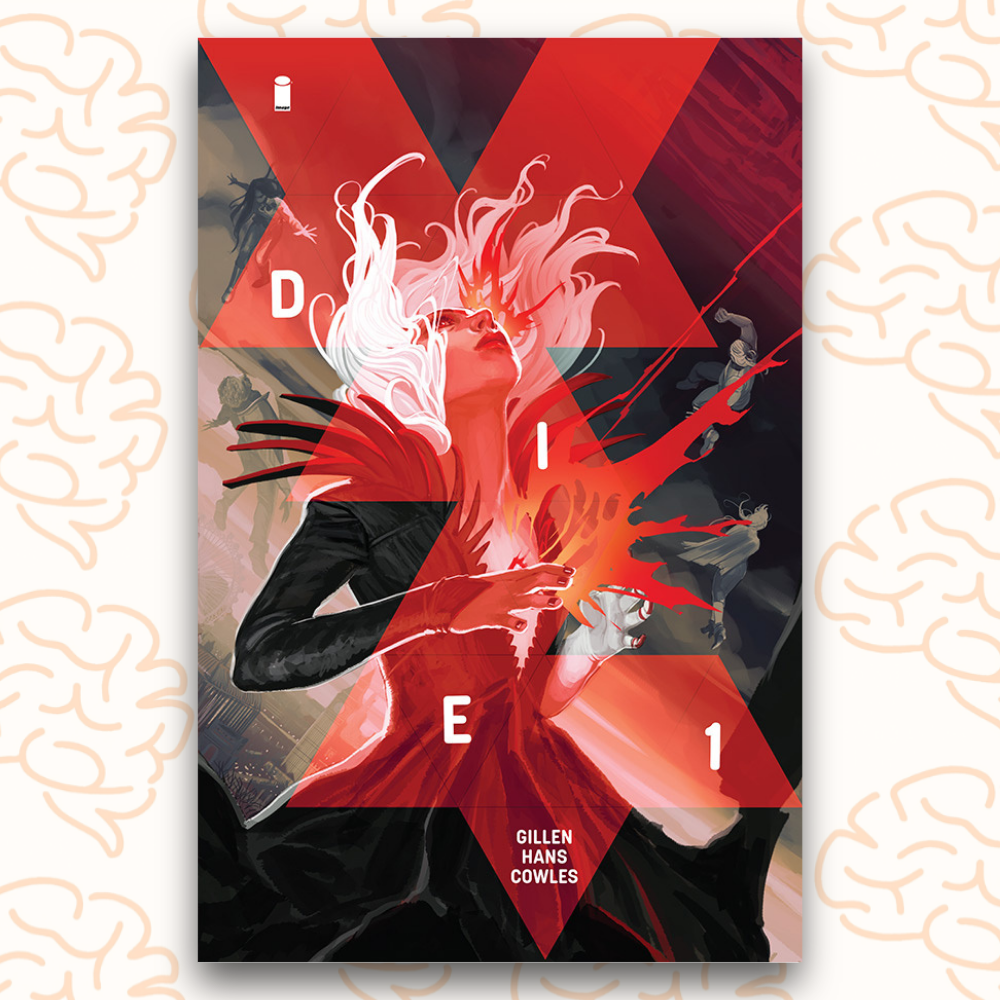
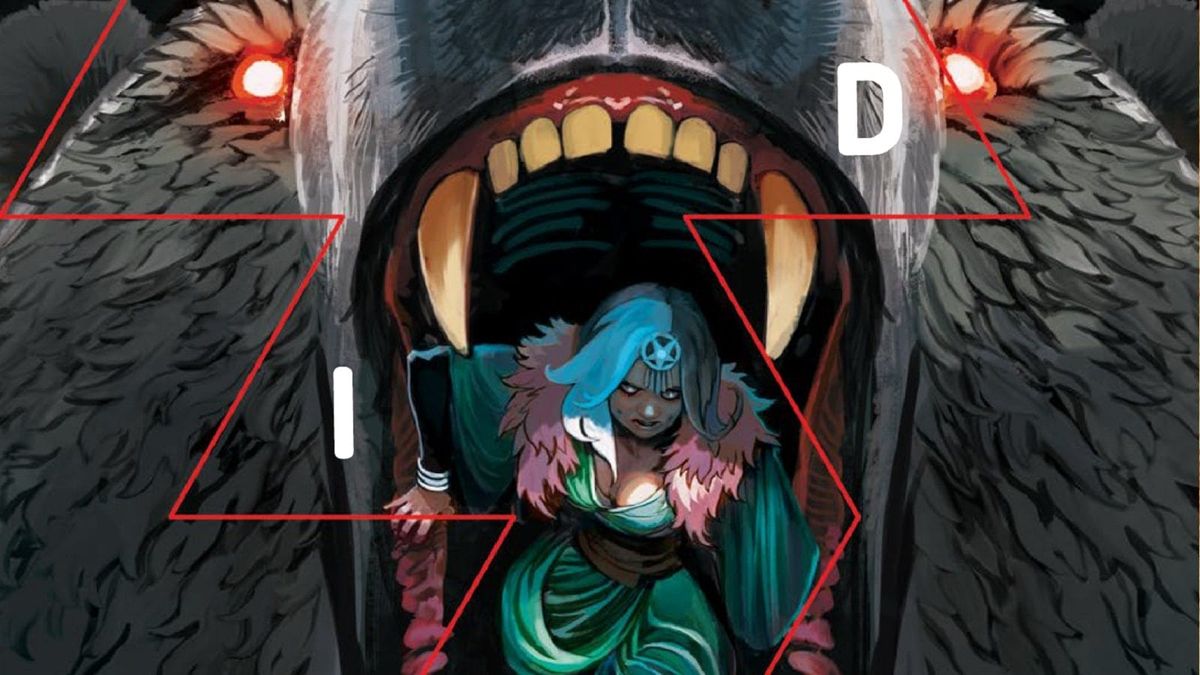
The original DIE follows a group of six people, what you might call a "party" (they gathered for a literal birthday party), who were sucked into a game world Jumanji-style when they were teenagers. Except instead of finding themselves in a safari-themed board game, these players are drawn into the setting for a tabletop RPG designed by a teenager, who has spent practically their entire life up until that point doing little other than studying the form, function, and history of tabletop RPGs.
After a trying adventure, the party managed to escape, minus one member who was left behind in the game world (Sol, the teenage game designer) – their fate unknown, but presumed dead. The rest of the party, bearing their various scars, both psychological and physical, returned to their lives and grew up.
If you haven't read DIE and are wondering why I just spoiled it entirely for you, don't worry, I didn't. All of that is covered in the first few pages of the series' debut issue. DIE's plot begins in earnest 30 years after those events, as the five surviving, now-adult players are sucked back into the game world they struggled so hard to escape, forced to make more sacrifices, accrue more scars, and face the repercussions of certain choices they made decades ago if they ever hope to return home once more.
Gillen became so invested in DIE's game world that he eventually turned it into an actual RPG, called, appropriately, DIE RPG. Having established that DIE itself is sentient and outside of time, any real-world party's adventure played using DIE RPG is canon to DIE, and part of the game's attempts to a certain the purpose of its own existence (a more sci-fi version of this might be an AI that has become sentient and is running countless simulations in search of existential meaning), hence the "X million" stories Gillen mentioned above.
"Right at the beginning, my core idea of DIE, even before talking to Stephanie, was... this is a fantasy device to examine what games and people do when they intersect," Gillen explains. "So with DIE, whilst it exists to tell a very specific story, I always knew, right from the off, that this was a device I would like to return to as long as I have stuff I'd like to say. The fact that it appears to be a completely closed story is because we're good at our jobs."
"Comics is such a jealous medium."
And Gillen does have more he'd like to say, as it turns out. He and Hans are back with their own new entry into DIE's canon, the sequel series DIE: Loaded, which picks up one year after the conclusion of the original DIE. Gillen says that, while DIE is self-contained, readers can go back and see the moment where DIE: Loaded, as a concept, was born.
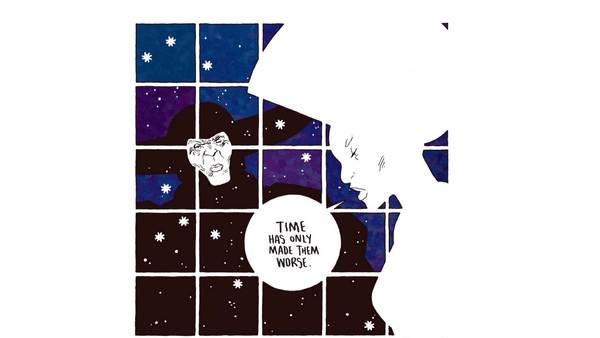
"DIE was written to be an implied continuation, as in, there's lots of ways the fantasy exists afterwards," he says. "For example, Ash, I think, has a considerably happier journey if you just stop at the end of Volume 1. But when, specifically, we had the idea of doing the story that we were going to do, I reckon, if you look at the exact panel where Ash is talking about her and Sophie's attempt to have children, and how it didn't work out, and in this one panel she says, 'I don't talk about Sophie much, do I?' There's a little aside there, and probably that's the moment."
Sophie is Ash's wife, and one of several characters that the players leave behind when they're sucked back into DIE for the second time. Other members of the group have children or parents old enough to remember the last time their child went missing, but DIE being as focused as it is on the game world doesn't leave much room to explore those who have never been there.
"Comics is such a jealous medium," Gillen points out. "If it was like prose, there'd be so much more space to go back to Sophie. As it was, no, there's other stuff on, and especially in the case of Ash, so much about Ash's relationship with fantasy is because it's separate. It's a place where she puts stuff, and puts stuff she didn't necessarily always want out."
"WHAT AM I FOR?"
Gillen is, at least in part, referring to a choice Ash makes with their DIE character. They're the only member of the group who chooses to play as a character whose gender differs from the one they present in the real world. Why? That gets to the question at the heart of DIE, almost literally.
"WHAT AM I FOR?" is the query repeatedly intoned by the world of DIE itself, first blasted wide to anything with the ears to hear it, and then later to the protagonist party, specifically. In truth, it is essentially asking, "What is the purpose of a tabletop RPG?' but more pointedly, "Why do real people – why do you and others like you – spend their time in this specific form of fantasy?"
Before the adult players can escape the world of DIE a second time, they must provide an answer, which means putting a finger on the real reason, the underlying and until-then unspoken driving motivation for them spending so much of their youth on these games, a reason they probably didn't even realize they had at the time, and could only articulate with the benefit of age and distance... and the threat of a world-annihilating sentient god-being looming in front of them.
Life Outside of the Magic Circle

The captive players do find their answer, and that's great for them, but what about Sophie and the others who were left behind? Roleplaying can be a time-intensive hobby – sure, people don't normally disappear for years-long stretches, as they do in DIE, but a few hours once a week does add up eventually. As I re-read DIE ahead of this interview and read the first issue of DIE: Loaded, in which Sophie is surprisingly sucked into the same world that Ash twice escaped, I realize that there's a subtle choice being made every time you play an RPG.
Time spent in that fantasy world is time not spent with anyone who isn't involved in that fantasy. In DIE, the heroes have that choice thrust upon them, to leave their wives, their parents, their children behind to inhabit a fantasy realm. Yet, in reality, so many people make that choice willingly and repeatedly, for hours at a time, eventually adding up to days. There's value in that choice – that's what DIE is largely about -- but what's the cost to those relationships with people who aren't a part of the adventure?
Gillen describes it as "a barrier between people in the magic circle of the game and people outside. The way I really thought about it was less about the fact that this is about the people left out and more about how trauma cascades out from any individual event.
"No one is an NPC."
"This is where we kind of step away from DIE's RPG metaphor and more towards DIE's character study," he says, "because that's one of the other sides of DIE. The second you start thinking about these people in a real way, you start to see that they reveal many facets. The second you look at Sophie's daughter, now, really thinking about her, you say, 'Oh, right, yeah,' and the idea of, 'Your husband has disappeared, and it's just been two years, and then a corpse turns up, and oh, and she's got a kid, she's been single-parenting through all of this' – what on earth was going through her mind? The same as all of them: How is the traumatic events of people disappearing for two years, and then three years again, impacting the people around them?"
And that leads to Gillen's thesis of DIE: Loaded: "No one is an NPC."
"It's all about the extended cast of DIE, who you know," he says. "So we get to know the cast we know better through people looking in from the outside, but also we have people who were just kind of tangentially in the story, and are now on center stage. The first [DIE] was, 'this is about people who know each other, learning more about each other and themselves via the medium of a game,' as in, they know each other, and they see each other differently for the shared experience.
"DIE: Loaded is kind of the opposite of that."
In Part 2 of our chat with Gillen, which will be in next week's edition of this newsletter, we'll get more into what distinguishes DIE: Loaded from DIE. In the meantime, the DIE: Loaded Volume 1: Zero Sessions is in comic shops now, and releases into bookstores on June 2. That gives you plenty of time to check it out for yourself, pre-order, or even dive into the original series. Get to it, and see you next session.