Patrick Kindlon Chooses Violence
The comics writer and punk vocalist opens up about his approach to art, philosophy, & the importance of human connection. Part one of our conversation.

“All you need to make a movie is a girl and a gun" is a quote often attributed to pioneering French New Wave film director Jean-Luc Godard (though Godard himself claimed it was American director D.W. Griffith who actually said it). It came up for good reason while interviewing comic book writer Patrick Kindlon, writer of Image Comics series such as Regicide and Tigress Island.
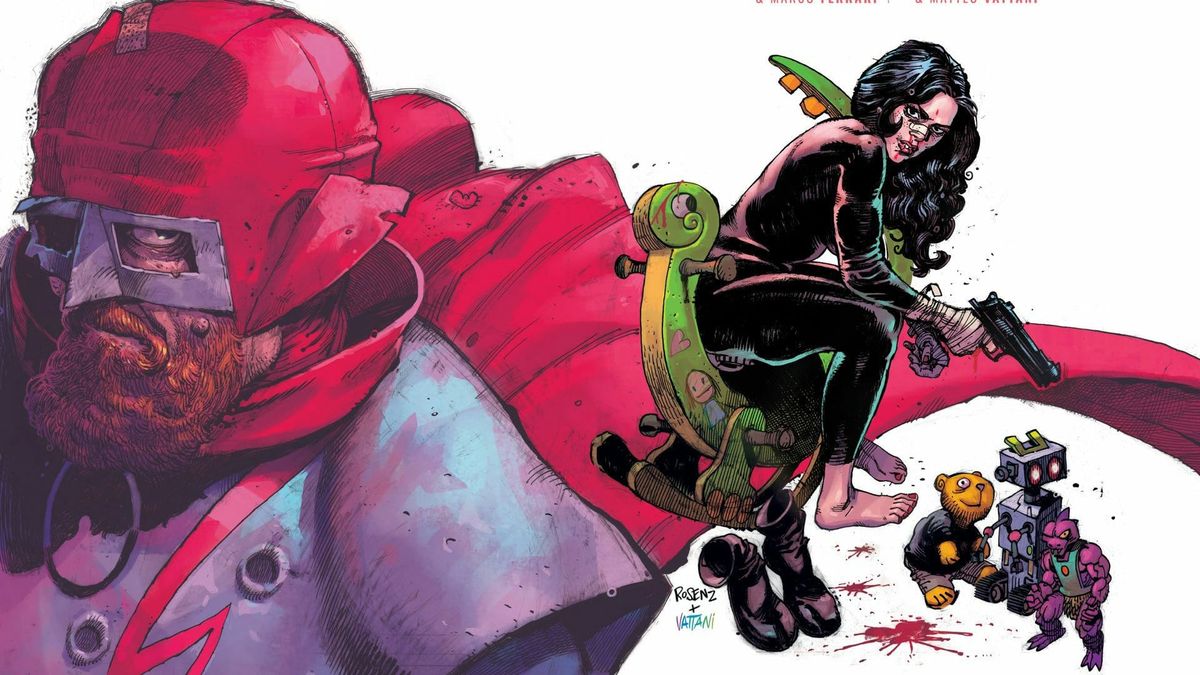
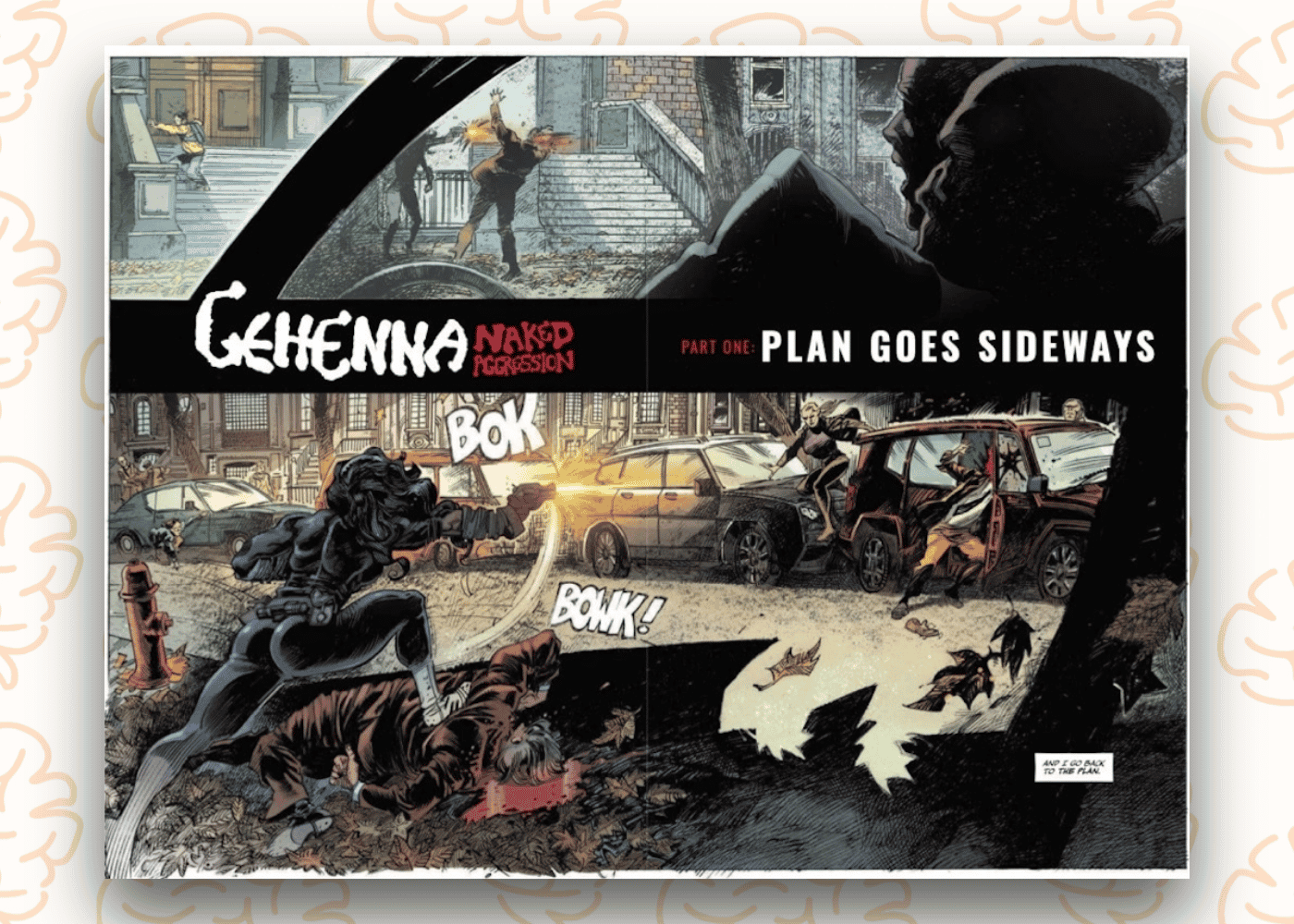
Kindlon mentioned the quote while explaining the aesthetic underpinnings that run through his writing. While he mostly meant it as a way of articulating his broader approach to comics, he's also literally made that comic. Gehenna: Naked Aggression is about a woman with a contract on her head and debt that's been sold multiple times over.
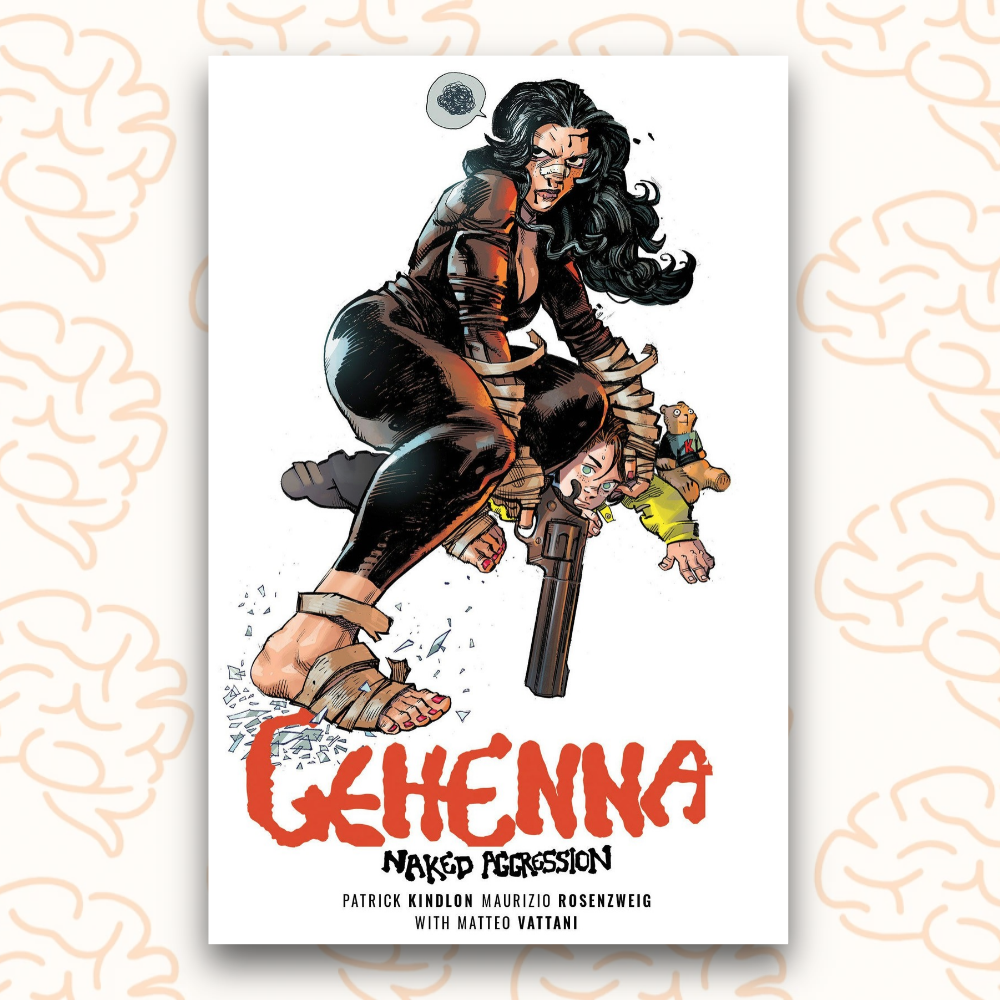
She also has a gun and a plan to use it, which unfolds over four issues worth of gnarly action drawn by Maurizio Rosenzweig. It's possibly the best, most concise example of the kinds of comics Kindlon has been making for years...
But Kindlon isn't just a comic book writer. He’s also a musician and lead singer for punk bands Self Defense Family and Drug Church. The latter has around 127,000 monthly listeners on Spotify, and their latest album, Prude, peaked at No. 3 on Billboard's Top Hard Rock chart.
Kindlon's music, frequently classified as "post-hardcore," is often aggressive, matching the gritty vigor of many of his comics. The albums can also be provocative and unconventional. (Self Defense Family's fourth studio album, 2014's Try Me, includes a 40-minute interview with pornographic actress Angelique Bernstein, a.k.a. Jeanna Fine, split across two tracks.) But the lyrics, delivered in Kindlon's blend of subtle growls and wailing shouts, can cover a range of topics, often gravitating toward modern social anxieties through satirical storytelling with biting humor.
Drug Church's most popular song on Spotify and Apple Music is "Weed Pin" from their 2017 LP Cheer.
Drug Church's most popular song on Spotify and Apple Music is "Weed Pin" from their 2017 LP Cheer. The lyrics tell the silly story of an underpaid lab worker/stoner who messes up years of research by slipping on his first day in dress shoes and sticking his thumb in a petri dish. Another song off the album, "Unlicensed Hall Monitor," about how we so often put the worst people in charge of our lives, includes such cathartic lyrics as, "Here's a guy with a search history darker than a sea trench telling you how to live."
"My wife has made the observation that I've got to change up my themes in my work, because comics and music, for a decade, the theme that most people are picking up on, it seems, is a distrust of the very word 'community,'" Kindlon tells me from his home in Tasmania, "a cynicism about the motivations of groups or larger things – and the interplay between the individual desire and how somebody might use that in a social setting. So much of my music is kind of off-putting because the underlying themes that people can pick up on are that, and nobody wants to hear that shit."
You'd be forgiven for knowing Kindlon only through his music without knowing about his comics, or vice versa. He’s not the only creator with one foot in comics and the other in punk or punk-adjacent music (Claudio Sanchez and Gerard Way are two more examples). Kindlon, however, doesn't mix the two creative passions the same way most others do, at least not overtly. But then comics was always where he wanted to be, he tells me. The music just happened by accident.
“Music is something I fell into,” Kindlon admits. "It was not my ambition as a child. Comic books were my ambition... in the same way that kids talk about being an astronaut or a firefighter. It was something that I wanted to do since I was very young. Not until my high school years was I really engaged with the idea of performing music of my own.”
Kindlon walks me through his relationship with comics. Like many, he started with the superhero stories he found on the spinner rack at the pharmacy his mother used to take him and his siblings into. (“Two kids in strollers and two kids walking, probably, at that time. My mother, probably to shut me up, would buy me whatever was on the spinner racks at the Fay’s Drug store.") He remembers being an especially big Spider-Man fan at the time, which exposed him to the art of future Image founders Erik Larsen and Todd McFarlane, but he was also fond of some less-appreciated greats. “Larry Stroman is in my view one of the all-time greats,” he says, “and if he had a bigger body of work, we would be regarding him as an American master.”
Then came Vertigo, and while Sandman was inescapable at that time, Kindlon gravitated more toward the grittier Hellblazer, reading the complete run in library-borrowed volumes. "I'm doing it again right now, and that was a real influence; I don't know if anybody can see it in my work," he says. "It's a little on the nose at times, but there was a lot of outrage at that moment among the British creators, and you can see it in the work. It's highly politicized and not always in the most artful fashion."
Additionally, Kindlon mentions arguably the most iconic intersection of punk and comics culture, Love and Rockets, specifically naming Gilbert Hernández's Palomar stories as an influence. "Because it feels very lived in," he explains. "It feels very tactile. It feels like a thing that you are experiencing. It's not like a Kirby page-turn, where you feel like you're experiencing going into the negative zone or the vast reaches of space or something. It's not that type of experience; it's more like a familiarity with your own surroundings, but they're not your surroundings. I'm still trying to figure out how to make a book of that type, where the town is what the story is, but I haven't managed it yet."
“Anything I arrive at that some people might consider a success is largely accidental by virtue of just fumbling around like an asshole,” – Patrick Kindlon