What the Vertical Heck Is Going On, Marvel?
One glance at Marvel & USA Today's new Spider-Man Infinity comic tells you something isn’t right...

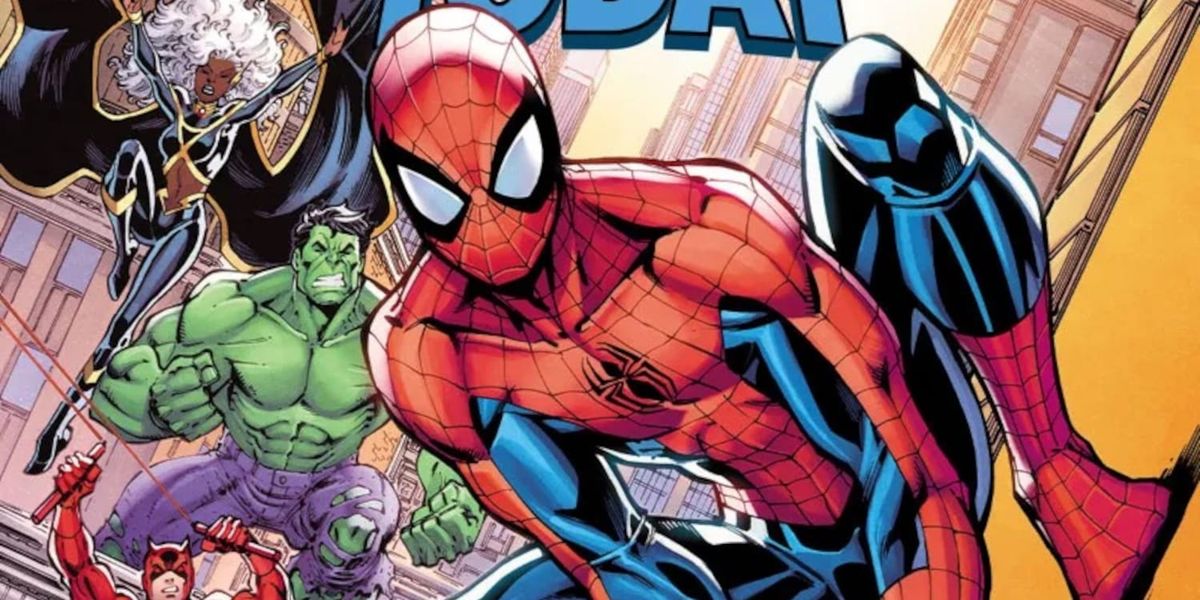
A little more than a week ago, Spider-Man Today, a new vertical scroll comic (which Marvel brands as “Infinity Comics”), debuted on the USA Today Play website. This should be great news. Al Ewing, one of my favorite superhero writers, is penning the strip, and veteran artist Todd Nauck is drawing it. Superhero comics, and Spider-Man in particular, have a long history of popular and long-running newspaper strips. Putting a vertical scroll comic on a major news publication’s website feels like the modern-day, digital-era equivalent.
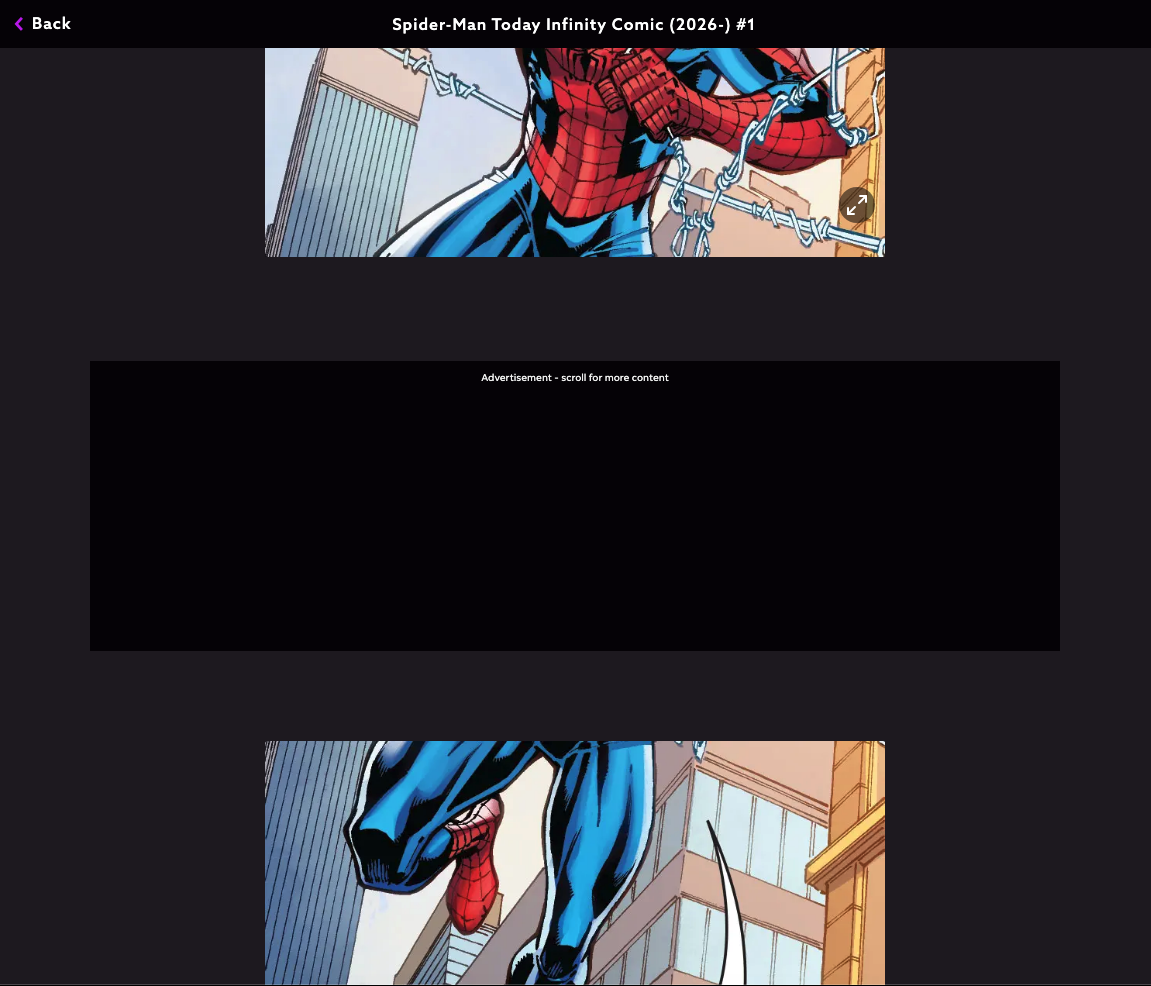
But one glance at the comic tells you something isn’t right. There are ads mid-panel, sometimes bisecting our webslinging hero. And even when there’s not an ad, there’s a significant gap where one image ends and the next begins, creating a choppy scroll and often disconnecting word balloons from the intended speaker. It’s a frankly harsh and embarrassing reading experience.
Of course, this isn’t Marvel’s only Infinity Comic. They’ve been adding Infinity Comics starring their marquee characters to Marvel Unlimited since 2021. Most of them are originals (I remember Declan Shalvey’s opening arc of X-Men Unlimited being pretty neat). However, at launch, Marvel was also adapting some of its older comics into the vertical scroll format.
The slice-of-life stories of Spider-Man Loves Mary Jane were a natural enough fit for a medium already dominated by romance comics. However, I was personally shocked to see Matt Fraction and David Aja’s Hawkeye reconfigured into Hawkeye: My Life as a Weapon Infinity Comic, given how essential Aja's meticulous page layouts are to that series.
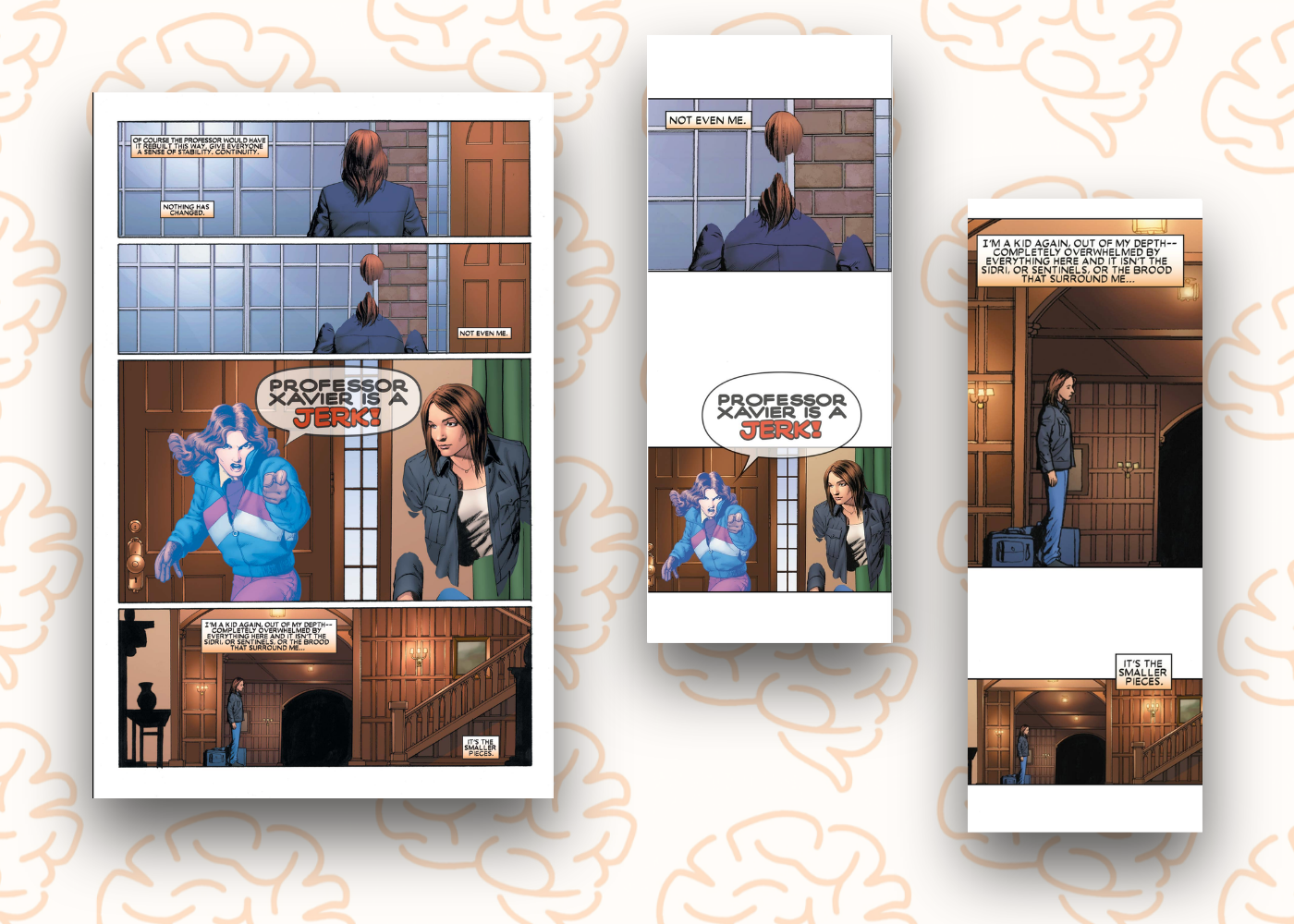
Marvel seems to be outsourcing these projects lately. Webtoon is currently serializing several such adaptations, including one of Joss Whedon and John Cassaday’s Astonishing X-Men. The Webtoon version strips Cassaday's panels of their context and storytelling flow.
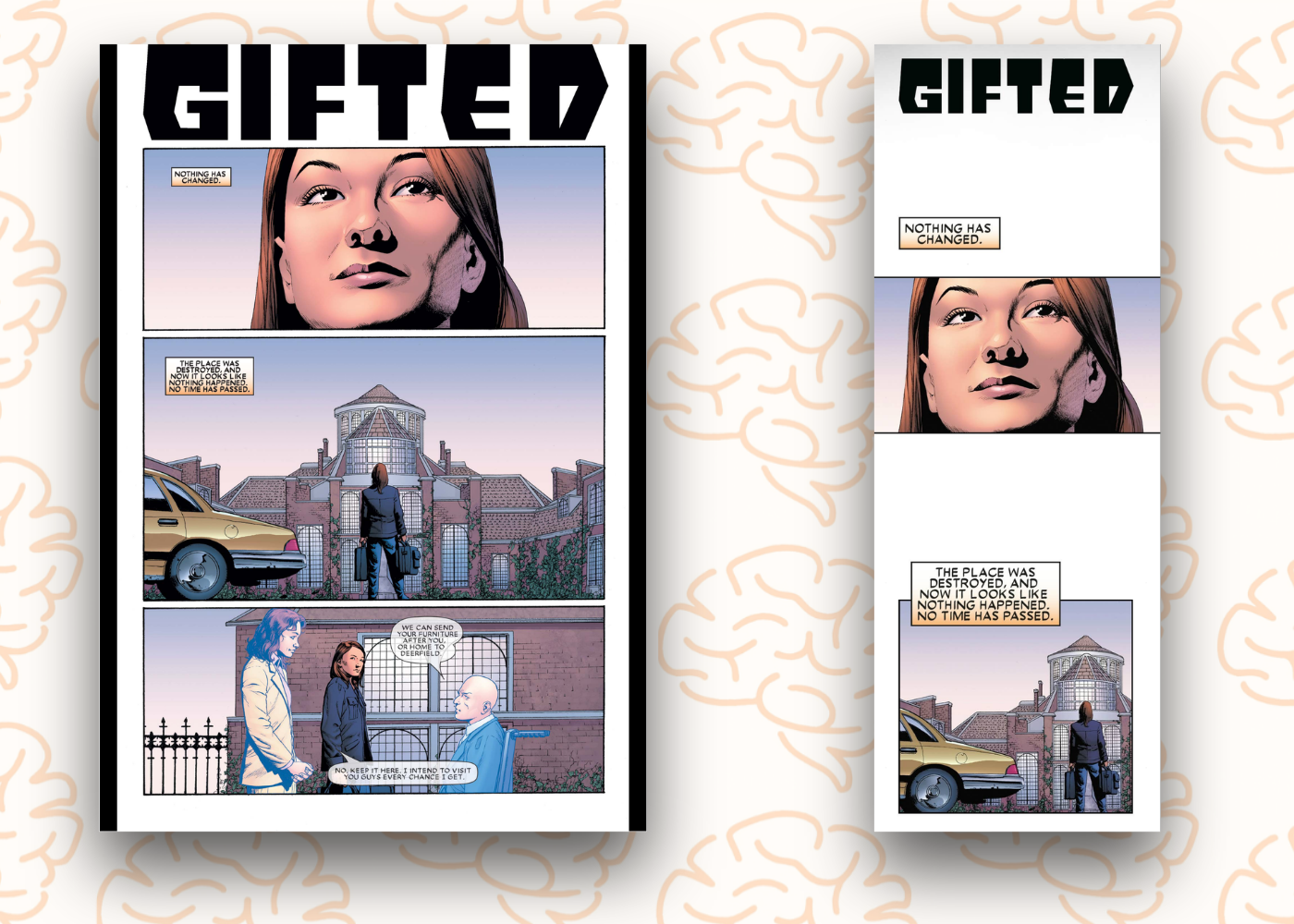
Instead, readers get a largely one-panel-after-another scrolling experience. The adaptation even bluntly turns some of the horizontal panels on their side to fit the phone screens these adaptations are intended to be read on, changing the orientation of Cassaday's artwork.