Editing Weird

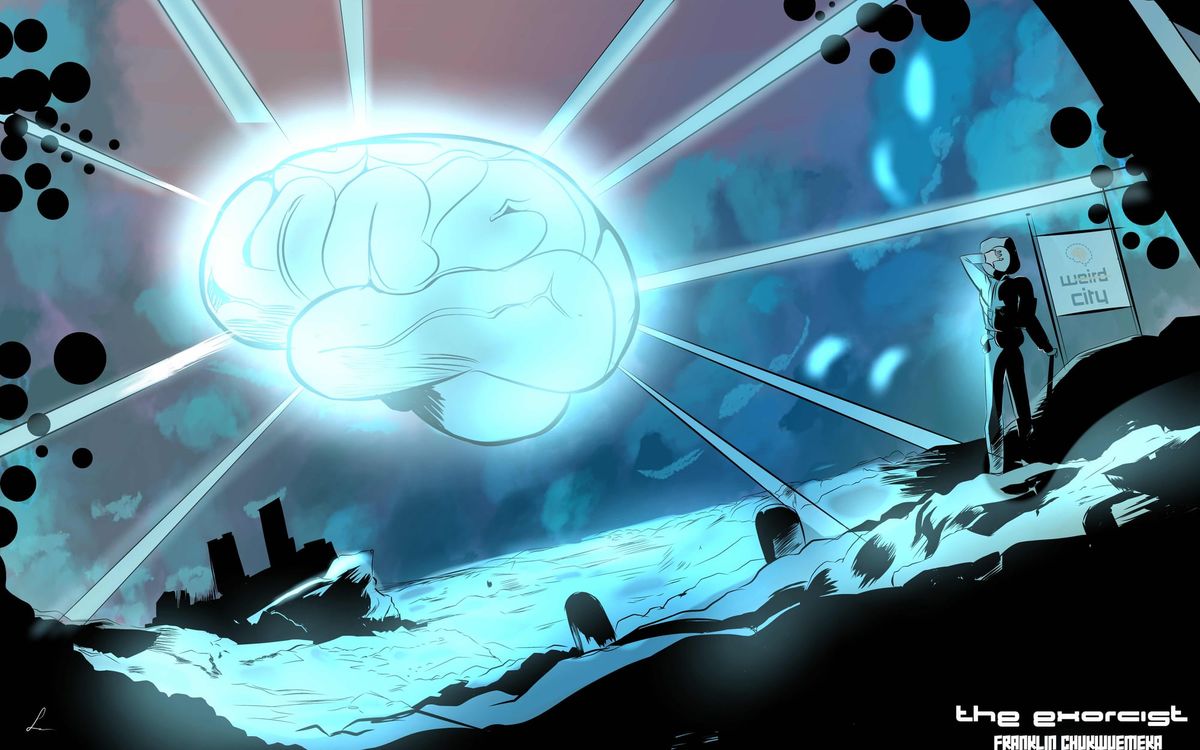
“You can’t think yourself into writing, but you can write yourself into thinking.”
I spent my middle school years at a charter school that had many of the issues that you often hear in horror stories about how terrible privately owned and operated charter schools can be. But I also had some pretty good teachers. Chief among them was my sixth-grade English teacher, Mr. McGinty. He delivered to my class the words of wisdom I quoted above as a mantra for whenever we were struggling to figure out what to write about or how to start an essay.
It’s a saying that’s served me well over the years, both as I graduated to higher levels of education and in my career as a journalist. And at the risk of triggering a certain Hamilton song running through your head, I’m going to rely on it again here as a way to write my way into thinking about what this introduction should be about.
There was a time about 20 years ago when comics seemed poised to cross over into the mainstream conversation like never before. Hollywood writers were doing work for Marvel, DC, and other publishers. Bryan Lee O’Malley’s Scott Pilgrim comics were seeing an unprecedented level of crossover buzz for an indie book, and it seemed like the glut of new movies based on comic books would force people to start paying more attention to their source material.
It was under the spell of those halcyon days that I decided I might be able to make a career out of writing about comic books – something I already did a lot of on the old, free blogging platforms of the early internet (DeadJournal, Xanga, etc.). After all, movie critics existed, and comics seemed like they were poised to be at least as essential to popular culture as films were. Why shouldn’t I be able to support myself as a comics critic and blogger?
What can I say? I was young, and I was dumb, and I had no real understanding of how lucky the handful of people able to call themselves professional critics were. I was also ignorant of the changes that were about to hit the digital media landscape, which would soon make job security a thing of the past for pretty much everyone with a journalism degree.
But in addition to being young and dumb, I was also, crucially, very lucky. While it took me a while to get my foot in the door and into the online media industry, I did enough blogging to catch the attention of someone at ComicBook.com, who was looking for a local to join the staff.
Finally, I was making a living writing about comics… sort of. I loved my time at ComicBook.com, but it also served as a reality check, showing me what writing for digital media was like at the height of the SEO era and the compromises that came with it. So yes, I wrote about comics, but also a lot about television, movies, and whatever else would drive traffic.
I had a lot of great colleagues, some of whom I still count among my friends, and there were a handful of times when I did get to write about comics exactly as I had hoped to way back then, including writing features and interviewing talent. For years, I even wrote weekly comic book reviews for the site, which I guess technically made me a bona fide comics critic, for whatever that's worth.
But the realities of the industry didn’t go away. Growing a website to scale meant bending to the whims of whichever Silicon Valley master was most generous towards the media with their algorithm at any given time. Sometimes that meant social media platforms like Facebook, sometimes it meant pure SEO plays, and more recently, it's meant targeting Google's Discover feed. There was always an invisible hand that seemed to be pulling the strings.
After nearly 12 years, my time at ComicBook.com came to an end this past September. Within days, Tom reached out, and we began discussing collaborating on something new that would keep me writing about comics, which would eventually become this: Weird City.
So that brings us, finally, to Weird City Media. It’s an opportunity for me not only to keep writing about comics, but to finally do it entirely the way I’d always wanted to. That goes back to what Mr. McGinty taught me, too. I don’t want to SEO myself into thinking about comics, or make data-driven decisions into thinking about comics, or pivot-to-video myself into thinking about comics.
I want to write my way into thinking about comics – the work, the people who do the work, the industry that supports (and sometimes doesn’t support) those works. And then I want to write myself into thinking about comics, and then have those thoughts fuel more writing about comics: essays, features, reviews, interviews, maybe even some actual comics, bringing you thoughts and stories about comics that you haven’t already seen or read elsewhere.
I hope you’ll come along for the ride.
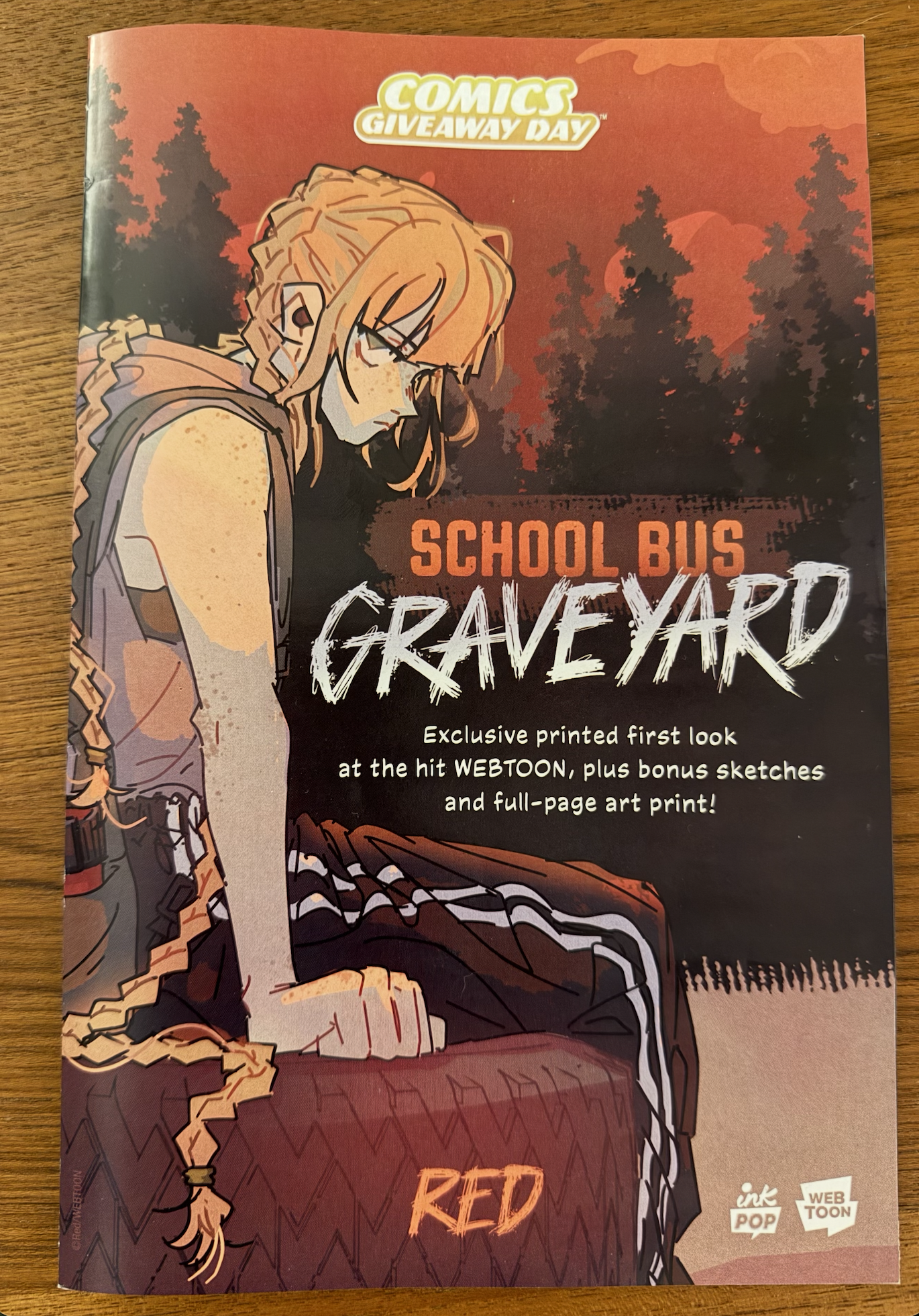
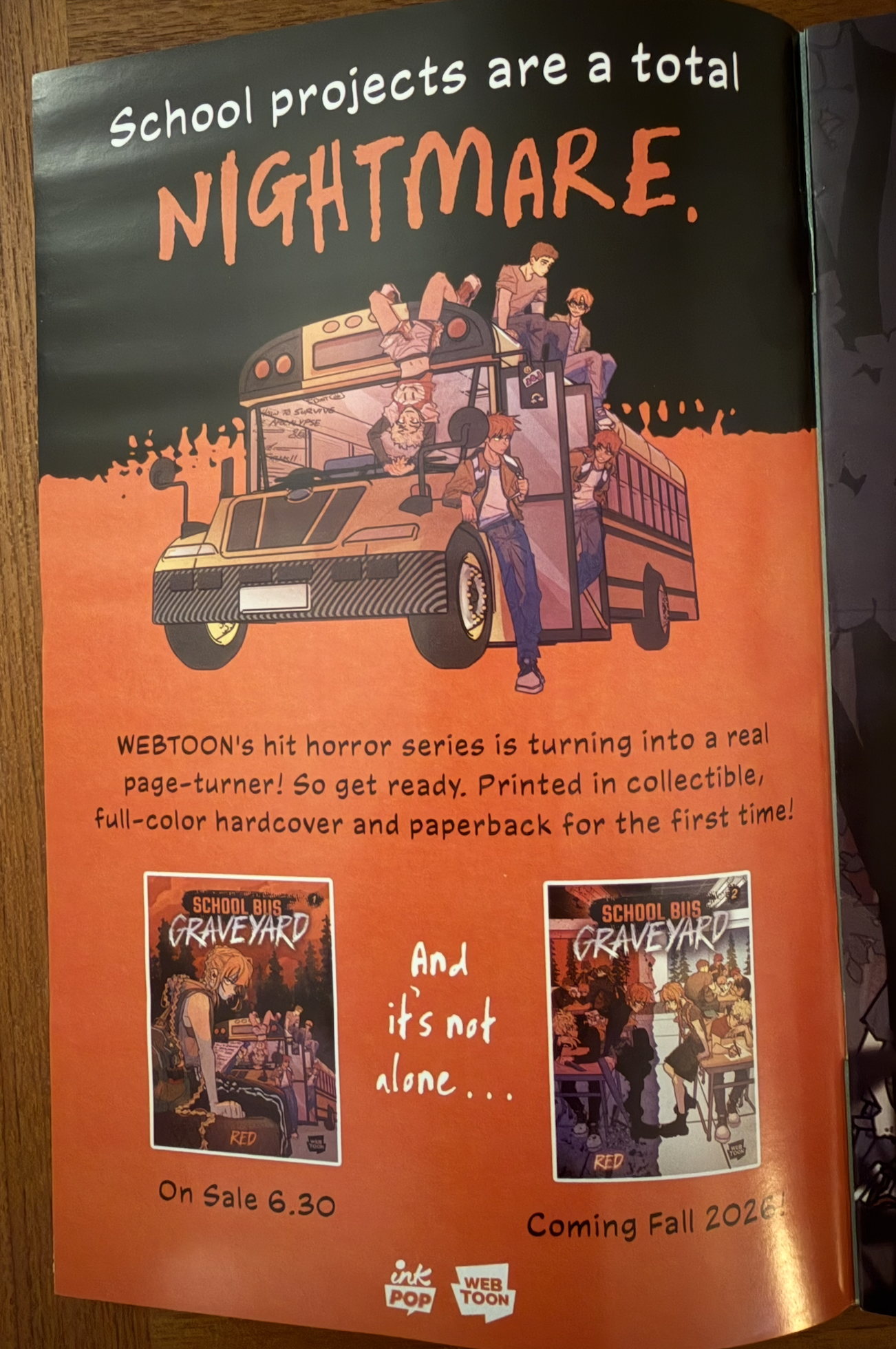
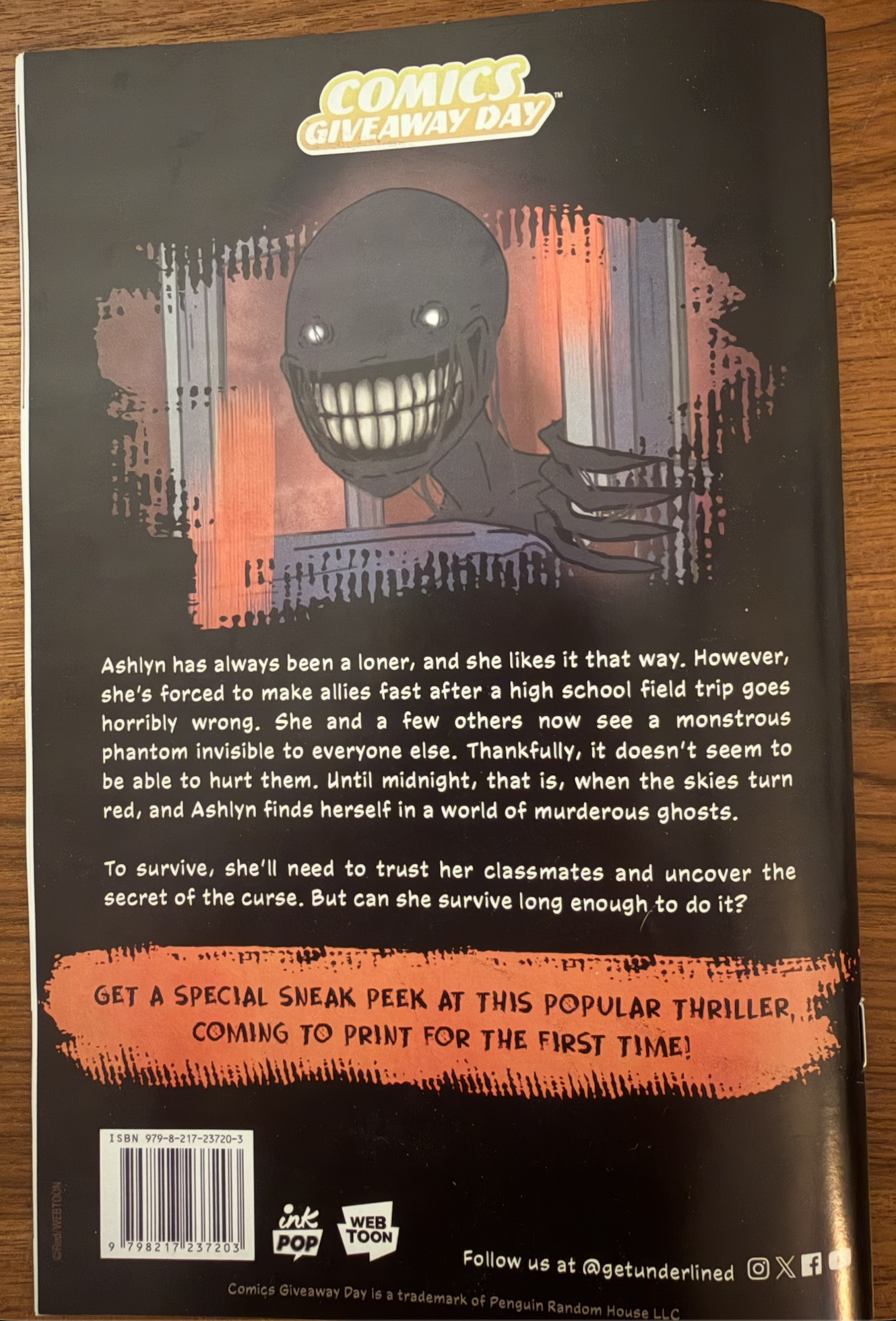
Front/Back cover and first interior page from the School Bus Graveyard Preview comic.
Seeking Creator Attribution on Webtoon's 'Comics Giveaway Day' Title School Bus Graveyard
School Bus Graveyard is a popular Webtoon series by creator Red, which has generated over "250 million views," according to the platform. This May, it was adapted into a preview print edition for Comics Giveaway Day by publishing partner Ink Pop/Random House, promoting the first print volume, collecting chapters 1-32 of the digital series, which is due out in June.
Curiously, the only creative attribution to Red exists on the cover, centered at the bottom. The 24-year-old author and artist, who goes by lilredbeany on Instagram and TikTok, doesn't get directly listed as artist, creator, or author in any of the interior pages, nor the back cover, either. The social media accounts for Random House's Underlined marketing division are listed at the bottom, but nothing pointing people to Red or where they can connect with her.